

What is Hell?
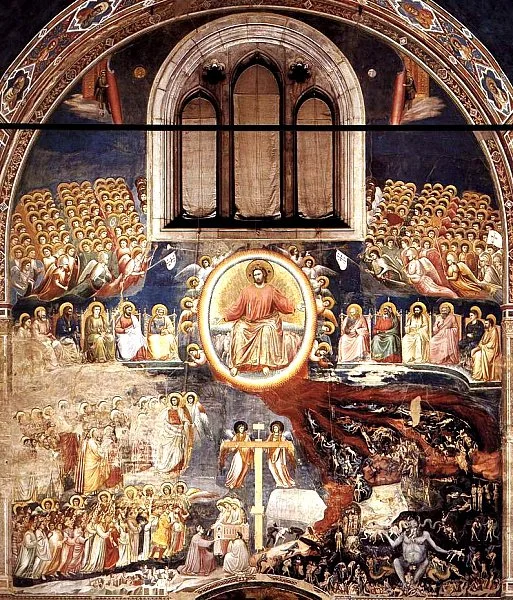
Hell is one of the most controversial topics of the Christian faith. Not only is it a point of attack from atheists and agnostics, but many Christians struggle with the concept of Hell. How could a just God send someone into eternal conscious torment in a lake of fire? I want to take a look at Scripture and Church history to help us gain a better understanding of what Hell is, what Hell is for, and why it is necessary. First, we should establish what Hell is and make the distinction between Sheol/Hades and Gehenna. Secondly, we will see what the purpose of Hell is and who it was originally created for. Lastly, we will look at why Hell is necessary if we are to understand God as just. We will also work towards removing caricatures of Hell that have been held by many since the Middle Ages. In tackling this major topic, my hope is that you can walk away comforted by the justice of God rather than fearful of the fires of Hell.
What is Hell?
Hell is a place of judgement and the final display of the wrath of God. It is indeed a place of torment and should be dreaded by all who will taste its flame. Not sounding too good so far, huh? Don’t check out on me yet. Hell is not a place where sinners have social meetings and drink coffee and talk politics—it is a place of final judgement. Before getting too far into that though, let’s first know what Hell is not. Hell is not Hades. There is a distinction in the New Testament between an intermediate place after death and the final place of judgement. Hades in the New Testament corresponds to the underworld of the Old Testament known as Sheol. This is an intermediate place after death wherein disembodied spirits await the resurrection and final judgement. This is neither Heaven nor Hell. Consider the passage where the sons of Jacob lied to him about Joseph’s death:
All his sons and all his daughters rose up to comfort him, but he refused to be comforted and said, “No, I shall go down to Sheol to my son, mourning.” Thus his father wept for him.
-Genesis 37:35 ESV (Also see Job 17:13, Isaiah 5:14, Jonah 2:2, etc.)
Should we think that Jacob went to Hell? God is regularly referred to as the God of Abraham, Isaac, and Jacob—we need to interpret this passage in its proper context. In the Old Testament, Sheol appears to be the place where all the dead exist in some form while awaiting the resurrection. This idea develops throughout the Old Testament. One shouldn’t be shocked to see an absence of Resurrection theology in the earliest years of Judaism as this would later be described in greater detail in the Prophetic Writings centuries after the Torah was first written. The book of Daniel offers us perhaps the greatest description of the Resurrection in the Old Testament.
2 And many of those who sleep in the dust of the earth shall awake, some to everlasting life, and some to shame and everlasting contempt. 3 And those who are wise shall shine like the brightness of the sky above; and those who turn many to righteousness, like the stars forever and ever.
-Daniel 12:2-3 ESV
The Greek word used for Sheol in the New Testament and in the Septuagint (the Greek translation of the Old Testament) is “Hades.” The name “Hades” was borrowed from Greek mythology, not in promotion of a false religion, but in utilizing an already popularized word to represent the underworld, or holding place of disembodied spirits. Many English Bible translations commonly translate both the underworld and location of the final judgement as “Hell,” which has led to much confusion. It is important to note that the ultimate fate of Hades is also to be cast into the Lake of Fire (Hell).
14 Then Death and Hades were thrown into the lake of fire. This is the second death, the lake of fire. 15 And if anyone’s name was not found written in the book of life, he was thrown into the lake of fire.
-Revelation 20:14-15 ESV
The word Jesus used for the final location of the damned in the Gospels is a place of significant Jewish history. It was a valley outside of Jerusalem known as “Gehenna” (See Mark 9:34, Matthew 5:27-30, etc.). It was a place where Jews would sacrifice their children, burning them alive to the false god, Molech. A later Jewish tradition says that drums would be beaten to drown out the cries of the children. Whether this is true or not, the idea remains: Gehenna was a place of idol worship and child sacrifice. But this wasn’t the only reason Jesus used the name “Gehenna” for Hell. Jeremiah lays it out for us in great detail.
30 “For the sons of Judah have done evil in my sight, declares the Lord. They have set their detestable things in the house that is called by my name, to defile it. 31 And they have built the high places of Topheth, which is in the Valley of the Son of Hinnom, to burn their sons and their daughters in the fire, which I did not command, nor did it come into my mind. 32 Therefore, behold, the days are coming, declares the Lord, when it will no more be called Topheth, or the Valley of the Son of Hinnom, but the Valley of Slaughter; for they will bury in Topheth, because there is no room elsewhere. 33 And the dead bodies of this people will be food for the birds of the air, and for the beasts of the earth, and none will frighten them away. 34 And I will silence in the cities of Judah and in the streets of Jerusalem the voice of mirth and the voice of gladness, the voice of the bridegroom and the voice of the bride, for the land shall become a waste.
-Jeremiah 7:30-34 ESV (Gehenna is the Valley of the Son of Hinnom) (For more in-depth study, read Matthew 22:1-14 alongside Jeremiah 7)
Jeremiah’s prophecy would be fulfilled during the destruction of the Temple at the time when Nebuchadnezzar’s forces laid siege to Jerusalem. Gehenna represents a place of judgement and slaughter—it is the Valley of Slaughter wherein God has poured out His wrath upon those who committed idolatry, child sacrifice, and other terrible deeds. Jesus uses this language when speaking with Jews who would have been familiar with Jeremiah 7 and the Babylonian exile. Jeremiah 7 describes a natural location wherein natural death would occur, but Jesus was talking about a place beyond the natural—a place described in Revelation as the Lake of Fire. It is also referred to as the “second death.” The title “Gehenna” conveys the idea of the judgement and death that one will face for his or her unrepentant sin and rebellion against God. Jesus sent a clear message to those who listened. Gehenna is the fulfillment of the fate of the unrighteous, the resurrection to everlasting contempt, that we read about earlier in Daniel 12.
So what is Hell? Hell is a spiritual reality reflected in a natural event. Gehenna in Jeremiah 7 was the Valley of Slaughter where the bodies of rebellious Jews were to be buried. Likewise, Hell (Gehenna) is the supernatural location of God’s final judgement on the wicked, the second death. Is it a place of fire and eternal torment? Does everyone experience the exact same suffering? We will look at those topics a bit later. However, what we need to know before moving forward is that Hell is a place that Christians ought to do everything in their power to avoid and to help others escape. That can only be done through Christ Jesus.
Hell’s Purpose
Hell’s purpose is relatively simple to explain as we’ve already touched on it in the prior section. Hell is the balanced weights; Hell is the cleaning of the cosmos before eternal peace. I am thankful for Hell—that language may be shocking to some, but let me explain. I have heard horrendous stories of how people have abused others, particularly children, and received the death penalty. At times, children have been abused, murdered, and cast aside. This grieves me as a father and should grieve any human with a shred of decency in them, regardless of their religious stance. When I think about how the abuser will get an injection to end their life, I find myself craving justice. Human beings created in the image of God were tormented, and all this person receives is a relatively painless injection. They didn’t even receive the level of torment that they forced upon others. My heart desires justice. I first desire that all repent, but if there is no repentance, Christians can have peace knowing there will be justice. You may ask, “Child abusers certainly deserve Hell, but what about people that lived a good life?” I think that’s a fair question to ask. Folks in more reformed circles might just respond by saying, “There’s no such thing as a good person! We all deserve Hell!” While I actually agree with that answer, I want to give a bit of a different response, but let’s save that for the “Caricature of Hell” section.
So who is Hell for? If you’ve made it this far, you might have come to the conclusion that Hell is for sinners. And while that’s true, and while it’s true that Christians deserve Hell but escape it through faith in the Lord Jesus Christ, Hell was not originally created for humans. Mankind was created to have dominion over the earth. We were meant to rule the world. Many think the earth was created perfectly; I am persuaded that mankind was meant to bring the world into an Eden-like state. Eden may have been the only perfect place on earth, but it was the responsibility of men and women to help establish the world as an Eden. It is still our responsibility—I think this is why the pursuit of science and medicine remains a moral good. We are continually working towards removing diseases, cleaning the Earth’s atmosphere, establishing systems of justice throughout the world, etc. I believe we are hard-wired to seek a paradise, but that can ultimately only be found in Christ.
In Eden, Adam and Eve were given permission to eat of every fruit in the garden except for the fruit from the tree of the knowledge of good and evil. In the Eden scene, we see a serpent deceive Eve into eating this fruit. This serpent wasn’t a snake like you and I would normally think—it was an angelic being. It was likely common for Adam and Eve to encounter beings of such a kind given that some angelic beings were also given territories to oversee in the earth (for a better look at this topic, read Michael Heiser’s book, The Unseen Realm). Eve ate the forbidden fruit as did her husband. We then see that God curses the serpent (Genesis 3:14-15). Who was the angelic being we know as “the serpent?” John the apostle gives us the answer in the book of Revelation.
Then I saw an angel coming down from heaven, holding in his hand the key to the bottomless pit and a great chain. 2 And he seized the dragon, that ancient serpent, who is the devil and Satan, and bound him for a thousand years…
-Revelation 20:1-3 ESV
The Devil is an angelic being that sinned against God. He was not the only one to do so. There were other angelic beings that sinned—some had sex with human women, creating a race called the Nephilim. The devil, however, didn’t seem to fall because of lust but rather because of his desire to be worshipped. There are a couple of places in Scripture we could look at to suggest this, but a great resource for this would be the book mentioned earlier: The Unseen Realm by Michael Heiser. You may be wondering why I’m mentioning all of this when I’m supposed to be explaining Hell’s purpose. We asked earlier, “Who is Hell for?” Jesus shows us clearly in the Gospel of Matthew.
41 “Then he will say to those on his left, ‘Depart from me, you cursed, into the eternal fire prepared for the devil and his angels. 42 For I was hungry and you gave me no food, I was thirsty and you gave me no drink, 43 I was a stranger and you did not welcome me, naked and you did not clothe me, sick and in prison and you did not visit me.’ 44 Then they also will answer, saying, ‘Lord, when did we see you hungry or thirsty or a stranger or naked or sick or in prison, and did not minister to you?’ 45 Then he will answer them, saying, ‘Truly, I say to you, as you did not do it to one of the least of these, you did not do it to me.’ 46 And these will go away into eternal punishment, but the righteous into eternal life.”
-Matthew 25:41-46
Hell was originally created for the serpent that deceived Eve. Hell is that ultimate destination of the devil wherein he will suffer day and night for all of eternity (Revelation 20:10). And not only him, but all of his “angels” will suffer their fate in the lake of fire. This demonstrates to us that Satan carries some form of authority over other angelic beings. That is not to say that he has authority over angels submitted to God, but rather he likely takes leadership over other fallen angels that rebelled against God. We may not know for certainty how many angelic rebellions there were. We know that the devil deceived Eve in the garden of Eden and we know that angelic beings later lusted after women, had sex with them, and had children (Genesis 6). This latter rebellion was one that led to God flooding the land and is likely what Jude refers to in the following passage:
5 Now I want to remind you, although you once fully knew it, that Jesus, who saved a people out of the land of Egypt, afterward destroyed those who did not believe. 6 And the angels who did not stay within their own position of authority, but left their proper dwelling, he has kept in eternal chains under gloomy darkness until the judgment of the great day— 7 just as Sodom and Gomorrah and the surrounding cities, which likewise indulged in sexual immorality and pursued unnatural desire, serve as an example by undergoing a punishment of eternal fire.
-Jude 5-7 ESV
The actions of these angelic beings are compared with the actions of Sodom and Gomorrah which were that of sexual immorality, directing us to understand that the sins of the angels mentioned are likely that of the angels in Genesis 6 who had sex with human women. Notice as well that these angels are kept in chains awaiting the judgement. This idea is also found in Peter’s writings:
For if God did not spare angels when they sinned, but cast them into hell and committed them to chains of gloomy darkness to be kept until the judgment…
-2 Peter 2:4 ESV
It is important to note that the translators wrongly use the word “hell” in this passage. As has been discussed earlier, Hell has often been used in English translations for “Gehenna,” “Hades,” and “Tartarus.” Tartarus is only used once in the New Testament and is the word used in 2 Peter 2:4 as we just saw. In Greek mythology, Tartarus was distinct from Hades and was a prison for titans and divine beings. “Tartarus” was borrowed from Greek Mythology as was “Hades,” and is used to describe the imprisonment of angelic beings while awaiting the final judgement. Tartarus may be related to Sheol/Hades but could also refer to a distinct prison for angelic beings. Whatever the exact details may be, these fallen angels also await the final judgement and will face Hell along with the devil and unrepentant sinners.
So in conclusion, who is Hell for? Hell, if by Hell we mean Gehenna, was originally created for the devil and his angels. However, there are many in the world who have subjected themselves in sonship to Satan.
8 Whoever makes a practice of sinning is of the devil, for the devil has been sinning from the beginning. The reason the Son of God appeared was to destroy the works of the devil. 9 No one born of God makes a practice of sinning, for God’s seed abides in him; and he cannot keep on sinning, because he has been born of God. 10 By this it is evident who are the children of God, and who are the children of the devil: whoever does not practice righteousness is not of God, nor is the one who does not love his brother.
-1 John 3:8-10 ESV
Living in habitual, unrepentant sin is to align with the devil and to face his fate of Gehenna. We are all naturally inclined to pursue that which pleases the flesh, even at the expense of others. It is this very pursuit of self-pleasure and disobedience to God that brings people into sonship to Satan and will ultimately be what brings them down to Hell. The only way to escape such an end is to look upon the person of Jesus Christ who died on the cross for us as atonement for our sins. It is through faith in Him that our sins may be expiated (atone for, remove the guilt). Through faith in Jesus, our name is written in the Lamb’s Book of Life. But if we do not believe, if we go on sinning, we will face the fate the apostle John writes about in Revelation 20:15 (ESV): “And if anyone’s name was not found written in the book of life, he was thrown into the lake of fire.”
Why Hell is Necessary?
We’ve already covered a lot of ground. Feel free to take your time with this and to search out the Scriptures for yourself. There are many different thoughts and ideas on Hell, and I want to be clear that I am representing my personal persuasion. I believe that what has been laid out thus far is the best representation of Hell that considers how ancient Jews and early Christians would have understood it. We will look more into historical voices in the next section. Before we do, I want to respond to a common question posed to believers: “If God is all-knowing, all-powerful, and perfectly moral, why would He send people to Hell?” Or another question may be asked: “If God is all-knowing, all-powerful, and perfectly moral, why would He create people that He knew would turn from Him and go to Hell?” I’m not going to pretend these are easy questions to answer; they’re not. Nor do I want to exaggerate my response in a way that appears to us more compassionate but misrepresents the Scripture.
Hell is real. Gehenna is the final destination for those who reject God. It’s not going to be fun and it’s not going to be comfortable. But is it necessary? I think so. God is what is known as a “maximally great being.” This means that God literally cannot be greater than He already is. God cannot be more merciful; God cannot be more kind; God cannot be more loving. But there’s a balance. You may ask, “If God is the MOST merciful being, why create Hell?” That is because God is also the most just being. This is a pattern throughout Scripture—God loves justice. In fact, God requires ultimate justice. God (likely Jesus in a pre-incarnate form) appeared to Abraham one day at his tent along with two angels. He said that Abraham and Sarah would have a son in a year, but that was not the only reason He was there. He was there to bring justice to Sodom and Gomorrah, a place where immorality was rampant as is seen in the story when the people try to rape the angels (see Genesis 19 for details). The Angel of the Lord (as I will refer to the pre-incarnate form of Jesus in this passage) was with Abraham as the two angels left to rescue Abraham’s nephew Lot from the city. At this time, the Angel of the Lord began to speak:
17 The Lord said, “Shall I hide from Abraham what I am about to do, 18 seeing that Abraham shall surely become a great and mighty nation, and all the nations of the earth shall be blessed in him? 19 For I have chosen him, that he may command his children and his household after him to keep the way of the Lord by doing righteousness and justice, so that the Lord may bring to Abraham what he has promised him.”
-Genesis 18:17-19 ESV
This moment is followed by Abraham pleading with the Angel of the Lord, desiring to know if He would still destroy Sodom if there were 50 righteous in the city. The Lord spoke, saying that He would not destroy Sodom if there were 50 righteous in the city. Abraham then asks if He would destroy Sodom if there were 45, and then 40, and then 30, 20, and lastly 10. The Lord assured Abraham that He would not destroy the city even if there were only 10 righteous in the city. Abraham refers to the Lord in this passage as the Judge of all the earth and insists that He should be just. As it turns out, there appeared to be only one righteous man in Sodom, and even he was quite questionable for reasons we won’t get into here. However, God spared that one righteous man and his family that were willing to go with him. That is, of course, Lot, Abraham’s nephew, that I’m referring to. Lot was living in the city of Sodom at the time, and the two angels that left Abraham and the Lord went to Sodom and rescued Lot along with his wife and two daughters. However, Lot’s wife looked back towards the city and, in doing so, turned into a pillar of salt.
Now this presents an interesting thought to us: God would not destroy Sodom if even 10 righteous were found in the city; the one righteous man in the city was rescued by the Lord’s angels. Why should we imagine that this same God will treat us differently? Perhaps we could ask the same question as Abraham: if God is the Judge of all the earth, should He not be just (see Genesis 18:25)? God will have ultimate justice at the Final Judgement. Not a single righteous person will go to Hell. Hell is meant for unbelieving, wicked sinners who reject God. If we are to imagine that God is good as Christianity teaches, then not only must He be merciful, but He must also be just. For God to be just, then there must be a mechanism of justice that ensures everything ends in a perfect balance. There is not a single sin in history that will not be accounted for on the Day of Judgement. You can either pay for your sins yourself, or you can trust the One who paid it all on the cross.
People probably wouldn’t have an issue knowing that Hitler was going to Hell. They’d probably think he rightly deserved it. But we can too easily forget that God is an infinitely Holy God. You and I are closer to Hitler’s wickedness in our conduct than we are to God’s holiness in His conduct. We all deserve to face punishment. And if God is truly just, then there must be a final punishment for the Hitlers of this world. Hitler is said to have ended his own life; he got out easy. Did he truly face justice? I don’t think so. I think that we should actually be comforted in the fact that God is perfectly just. That happy thought allows us to live without facing the challenge of avenging ourselves in every situation where we were wronged. Or better yet, the cross of Christ allows God to show mercy to us rather than avenge others for the times we have wronged them. Consider what Paul writes in Romans:
19 Beloved, never avenge yourselves, but leave it to the wrath of God, for it is written, “Vengeance is mine, I will repay, says the Lord.” 20 To the contrary, “if your enemy is hungry, feed him; if he is thirsty, give him something to drink; for by so doing you will heap burning coals on his head.” 21 Do not be overcome by evil, but overcome evil with good.
-Romans 12:19-21
Should we be joyful that many will go to Hell? No, certainly not! But can we be assured that God will bring everything into perfect balance in the end and there will be total justice? Yes. Christians have been slaughtered by Islamic terrorists in the nation of Nigeria recently, and many people have lost loved ones. Can they mourn? Yes. Can they protect themselves? I would say yes. Should they make decisions based on a desire for revenge? No. God will have ultimate vengeance. That doesn’t mean that military action can’t or shouldn’t be taken. It means that it is the primary duty of Christians to love God and to love others; as for vengeance, we leave that to God. So why is Hell necessary? Because if God is perfectly just, then there must be a mechanism to ensure justice takes place. Think of an electric chair or firing squad: these are mechanisms of justice. Hell could be considered the mechanism by which God ensures perfect justice for all creation.
The Caricature of Hell
I hope thus far this has helped you gain a greater understanding of what Hell is and what Hell is not. In this section, I want to focus on various interpretations of the doctrine of Hell, what the early Church fathers believed about Hell, and give a brief answer for what happens to those who never hear the Gospel. This may take a while to unpack, but it is worth knowing some of the historic ways Christians have understood Hell. I think Hell may often be misunderstood. The goal of this section will be to work towards removing modern caricatures that can misrepresent Hell, or perhaps even misrepresent God.
You are probably most familiar with the common doctrine of Hell that posits Hell as a place of eternal conscious torment (ECT). ECT certainly has historical support of the Church throughout the centuries, but there is a lesser-known interpretation that is worth considering; that is, annihilationism (or conditional immortality). Conditional immortality abandons platonic thought that human souls are inherently immortal. It suggests that there will be a final resurrection followed by a final judgement, but that those who face Hell’s fires will eventually be totally annihilated, ceasing to exist. While some may totally reject this idea, it has more merit than one might initially think. The idea that the human soul is inherently immortal grew in popularity partly due to Plato’s philosophical contributions. In the Bible, immortality appears to be a gift from God only achieved through faith in His Son, Jesus Christ. And not only that, but there is interesting language of destruction that one might suggest points to a total ceasing of existence.
And do not fear those who kill the body but cannot kill the soul. Rather fear him who can destroy both soul and body in hell.
-Matthew 10:28 ESV
But as for the cowardly, the faithless, the detestable, as for murderers, the sexually immoral, sorcerers, idolaters, and all liars, their portion will be in the lake that burns with fire and sulfur, which is the second death.”
-Revelation 21:8 ESV
For the wages of sin is death, but the free gift of God is eternal life in Christ Jesus our Lord.
-Romans 6:23 ESV
The language of death and destruction seen in Scripture could lead one to consider that Hell may be a final judgement that leads to an end of existence. That is not to say that there are no passages that couldn’t be interpreted to understand Hell as eternal conscious torment. A fair argument could be made both ways, and neither is a heretical view. Believers remain within historic Christian orthodoxy whether they hold to ECT or conditional immortality. Some other passages could appear to point towards eternal conscious torment, such as Matthew 25:46 (ESV) where Jesus says, “And these will go away into eternal punishment, but the righteous into eternal life.” This language could suggest eternal conscious torment, while those who hold to conditional immortality would suggest that the eternal punishment referred to is the result rather than the process. Next, I want to look at how some early Church fathers understood Hell. As we look into history, notice how the Church has always had diverse perspectives on Hell. As an encouragement, how you understand Hell does not dictate how good or faithful of a Christian you are. Now, if someone totally rejects Hell, then that can lead to serious doctrinal issues. But as long as we remain faithful to the Scriptures and we believe that God is a just God, I see no good reason to feel that we must restrict ourselves to a dogmatic position on the matter.
As we begin to look at the writings of the early Church fathers, notice the differences between their understanding of the afterlife compared with the modern Heaven-or-Hell paradigm. The language of early fathers can at times be a bit difficult to interpret, so I don’t want to read something into their writings that they themselves may not have believed. Quotes and references will be provided to assist in removing false interpretations of their views. Feel free to search out these quotes for the broader context of what’s being said, as we will not look at all the material surrounding the quotes.
By these things, then, it is plainly declared that souls continue to exist that they do not pass from body to body, that they possess the form of a man, so that they may be recognised, and retain the memory of things in this world; moreover, that the gift of prophecy was possessed by Abraham, and that each class [of souls] receives a habitation such as it has deserved, even before the judgment.
-Irenaeus (Against Heresies, 2.34.1)
In this passage, Irenaeus (AD 130-202) was summarizing the story of the Rich Man and Lazarus from Luke 16 to suggest that souls have a continued, recognizable existence after death and go to the place they deserve. By using this passage as an example, it may be that Irenaeus held to the idea that wicked souls enter torment in Hades after death as did the rich man in the story, and that the righteous await the resurrection in peace as we see with Lazarus. Luke 16:19-31 is powerful evidence for the idea of a Hades/Hell distinction. It shows a rich man going to a place of punishment while a poor man named Lazarus goes to a place called Abraham‘s Bosom. Notice that this is not giving us a picture of heaven and Hell. The final judgment has not yet happened. And as we’ve seen earlier, Hades is the Greek word used in reference to the underworld of Judaism known as Sheol. Lazarus is not far separated from the rich man, but there is enough of a separation that they cannot reach one another. It seems that these two men are in a general location separated categorically: the wicked in agony, and the righteous in peace. This presents us with the idea of a temporary holding place for those who await the Resurrection and Final Judgment.
If, then, the Lord observed the law of the dead, that He might become the first-begotten from the dead, and tarried until the third day in the lower parts of the earth; then afterwards rising in the flesh, so that He even showed the print of the nails to His disciples, He thus ascended to the Father;— [if all these things occurred, I say], how must these men not be put to confusion, who allege that the lower parts refer to this world of ours, but that their inner man, leaving the body here, ascends into the super-celestial place? For as the Lord went away in the midst of the shadow of death, where the souls of the dead were, yet afterwards arose in the body, and after the resurrection was taken up [into heaven], it is manifest that the souls of His disciples also, upon whose account the Lord underwent these things, shall go away into the invisible place allotted to them by God, and there remain until the resurrection, awaiting that event; then receiving their bodies, and rising in their entirety, that is bodily, just as the Lord arose, they shall come thus into the presence of God. For no disciple is above the Master, but every one that is perfect shall be as his Master. As our Master, therefore, did not at once depart, taking flight [to heaven], but awaited the time of His resurrection prescribed by the Father, which had been also shown forth through Jonas, and rising again after three days was taken up [to heaven]; so ought we also to await the time of our resurrection prescribed by God and foretold by the prophets, and so, rising, be taken up, as many as the Lord shall account worthy of this [privilege].
-Irenaeus (Against Heresies, 5.31.2)
Here we see Irenaeus demonstrating a pattern for believers following the death and resurrection of Christ. In Against Heresies, Irenaeus refers to the Christian belief that when Christ was crucified, He descended to the realm of the dead. This is seen clearly in Scripture: “18 For Christ also suffered once for sins, the righteous for the unrighteous, that he might bring us to God, being put to death in the flesh but made alive in the spirit, 19 in which he went and proclaimed to the spirits in prison,” (1 Peter 3:18–19, ESV). Irenaeus appears to believe that this remains a pattern for believers: we die, descend to Hades, await the resurrection, and finally rise from the dead to eternally enjoy God’s presence. There later arose the idea that when Christ ascended into Heaven, He liberated the souls of the righteous dead from Hades and took them with Him. This, however, appears to have no explicit attestation in the second century and becomes a more explicit belief in later centuries. Irenaeus is an important figure because he claims to have sat under the teaching of Polycarp, a disciple of the Apostle John. This means that Irenaeus is extraordinarily close to the apostolic age and likely preserved some degree of apostolic teaching, though we should not equate his writings to Scripture. Let’s now look at the writings of Justin Martyr (approximately AD 100-165).
For if you have fallen in with some who are called Christians, but who do not admit this [truth], and venture to blaspheme the God of Abraham, and the God of Isaac, and the God of Jacob; who say there is no resurrection of the dead, and that their souls, when they die, are taken to heaven; do not imagine that they are Christians…
-Justin Martyr (Dialogue with Trypho, 80)
Now one may have concerns with reading Justin Martyr’s writing here at first because it appears he is vehemently against the idea that Christians go to Heaven when they die. It is important to note, however, that he is more specifically defending the necessity of the resurrection. Most Christians today that hold to the idea of believers immediately entering Heaven at death still hold to that existence as a disembodied, conscious state while awaiting the resurrection. Justin Martyr came from a philosophical background and so would have been familiar with Plato’s idea of the immortality of the soul. Justin Martyr is likely warning against the idea that the Christian soul enters Heaven after death in its final state, without need of resurrection. Although we can likely conclude Justin Martyr was not arguing against the modern understanding of righteous souls going to Heaven at death, we could still infer from his writing that he did not believe in a heavenly post-mortem state for the souls of believers.
In his Dialogue with Trypho, Justin Martyr recounts how he was walking in a field near the sea while meditating and encountered an old Christian man. Prior to becoming a Christian, Justin Martyr had philosophical training and appeared deeply interested in the thoughts of the great philosophers such as Plato. It so happened that this elderly Christian man was quite capable of responding to such philosophical ideas and left Justin Martyr with a love for the prophets of the Old Testament. That conversation led to the conversion of a great hero and martyr of the faith. In Justin Martyr’s conversation with the old man, they discussed the immortality of the soul, something Justin Martyr initially held to because of how heavily influenced he was by Plato. We will not look at the entirety of the conversation here, but the old Christian man takes the stance that the human soul is created and has its life in God. “Now the soul partakes of life, since God wills it to live. Thus, then, it will not even partake [of life] when God does not will it to live,“ (Justin Martyr, Dialogue with Trypho, 6). Let’s look at what this Christian man believed about what happens after death:
But I do not say, indeed, that all souls die; for that were truly a piece of good fortune to the evil. What then? The souls of the pious remain in a better place, while those of the unjust and wicked are in a worse, waiting for the time of judgment. Thus some which have appeared worthy of God never die; but others are punished so long as God wills them to exist and to be punished.
-Justin Martyr (Dialogue with Trypho, 5)
Justin Martyr is at times credited with believing in conditional immortality (annihilationism). It is not definitively clear what his precise position on the eternal fate of the damned was, but he appears to hold the view that human souls are not inherently immortal. The old man in this passage gives us a simple answer about what happens at death: the righteous go to a better place and the unrighteous go to a worse place. Both the righteous and the unrighteous wait for the final judgement. Following this, the righteous will live eternally with God and the unrighteous will be punished as long as God wills them to exist in their punishment. This idea pairs well with the conditional immortality view that souls will eventually cease to exist after facing their particular punishment in Hell. Let’s now look at Tertullian in the third century:
All souls, therefore, are shut up within Hades: do you admit this? (It is true, whether) you say yes or no: moreover, there are already experienced there punishments and consolations; and there you have a poor man and a rich. And now, having postponed some stray questions for this part of my work, I will notice them in this suitable place, and then come to a close. Why, then, cannot you suppose that the soul undergoes punishment and consolation in Hades in the interval, while it awaits its alternative of judgment, in a certain anticipation either of gloom or of glory?
-Tertullian (A Treatise on the Soul, 58)
Tertullian takes a firm stance that all of mankind go to Hades when they die and await the final judgement. He, as well as Irenaeus earlier, appears to be pulling from Luke 16. Tertullian gives one exception to this in chapter 55. He appeared to believe that only martyrs enter paradise at death, noticing the martyrs in Revelation 6 as well as a dream that the early martyr, Perpetua, had. “The sole key to unlock Paradise is your own life's blood. You have a treatise by us, (on Paradise), in which we have established the position that every soul is detained in safe keeping in Hades until the day of the Lord,” (Tertullian, A Treatise on the Soul, 55). It is worth noting that the thief on the cross who was admitted access into paradise by Christ was not a martyr for the faith, but rather was paying for crimes he truly committed (see Luke 23:43). It is possible that Jesus was referring to Abraham’s Bosom in Luke 23:43 considering He states that the thief would be in paradise with Him “today.” We know that Jesus went to Hades when He died, so if paradise is synonymous with Abraham’s Bosom, then it is possible Tertullian’s argument doesn’t work. Tertullian is generally believed to have held to eternal conscious torment for the damned. By the time we get to Cyprian of Carthage, ECT became more explicit in the writings of the early Church.
What will then be the glory of faith? What the punishment of faithlessness? When the day of judgment shall come, what joy of believers, what sorrow of unbelievers; that they should have been unwilling to believe here, and now that they should be unable to return that they might believe! An ever-burning Gehenna will burn up the condemned, and a punishment devouring with living flames; nor will there be any source whence at any time they may have either respite or end to their torments. Souls with their bodies will be reserved in infinite tortures for suffering.
-Cyprian of Carthage (Treatise 5, 24)
By the time of Cyprian of Carthage (early-mid third century), the language of the Church leaned more towards the eternal conscious torment of the damned in Hell and the immortality of the soul. Perhaps this is from Roman philosophical influence, but we can’t know for certain. There are some continued hints, however, at belief in mortal human souls. Now, believing in the natural mortality of the soul does not necessarily mean the unrighteous will eventually cease to exist. God is perfectly capable of keeping alive that which does not naturally live forever. For instance, He raised Christ from the dead. The question becomes: will God give to the unrighteous immortality at the resurrection so that they will suffer eternally? After all that we’ve looked at thus far, I feel that I can give a firm answer to this question. My answer is: I don’t know. When discussing Hell, we are discussing something we’ve never seen or experienced. It is rather foreign to us at the moment, and we must rely on the inspired Word of God to form an opinion. This is not a matter that Christians should divide over. Whether you hold to eternal conscious torment or conditional immortality, all Christians should be able to recognize that God is just and merciful, and we can rely on that thought to comfort us in these discussions.
One question that I would like to briefly respond to is: what happens to those who never hear the Gospel? What I want to encourage people with when asking this question is to look at God’s pattern of mercy in Scripture. We don’t know exactly what happens to those who never hear the Gospel, nor can we say with perfect confidence what happens to babies or the mentally disabled that die. The Scriptures may at times give us the answers for what is normative, but it doesn’t have to respond to every question. Normally, people can either choose to love and follow God or reject Him; but when a mentally disabled person stands before God, what will happen? That’s difficult to answer because mental disabilities are often on a spectrum. Some autistic individuals can speak while others cannot. Some may be able to understand the Gospel while others cannot. Romans 2 gives us hope in this:
12 For all who have sinned without the law will also perish without the law, and all who have sinned under the law will be judged by the law. 13 For it is not the hearers of the law who are righteous before God, but the doers of the law who will be justified. 14 For when Gentiles, who do not have the law, by nature do what the law requires, they are a law to themselves, even though they do not have the law. 15 They show that the work of the law is written on their hearts, while their conscience also bears witness, and their conflicting thoughts accuse or even excuse them 16 on that day when, according to my gospel, God judges the secrets of men by Christ Jesus.
-Romans 2:12–16 ESV
This passage shows us that even gentiles who have never heard the law by nature do the things of the law. It shows that they have the law written on their hearts. This can bring us comfort to know that God will judge people based upon what they knew. Jesus said, “If I had not come and spoken to them, they would not have been guilty of sin, but now they have no excuse for their sin,” (John 15:22 ESV). While this does not give people that never heard the Gospel a get-out-of-Hell-free card, I believe we can see that God will faithfully judge people based upon what access they had to the truth. We don’t know exactly what that looks like, but we can trust in God’s justice and mercy.
Final Summary
We have covered a lot of material in better understanding Hell, and there is so much that we haven’t covered here, such as purgatory, but I hope you found this sufficient as a balanced teaching on Hell. I want to briefly give you a summary of how we should understand what we’ve seen so far. Hell is a real place that was originally created for the devil and his angels. It is a place of suffering in payment for one’s sins against God. This is not to be confused with Hades/Sheol, which is the realm of the dead where souls await the resurrection. Gehenna is Hell, where Hades will one day be cast into along with everyone whose name is not written in the Book of Life. God will judge the unrighteous, and they will pay for their crimes, whether that is for a designated time period or a designated severity depending on that particular crime. And although Hell is a place of torment, agony, and suffering, all can find eternal life through faith in the Lord Jesus Christ.